
Browse.
Nothing more.
A minimal, privacy-focused web browser. Zero telemetry. No bloat. No AI gimmicks.
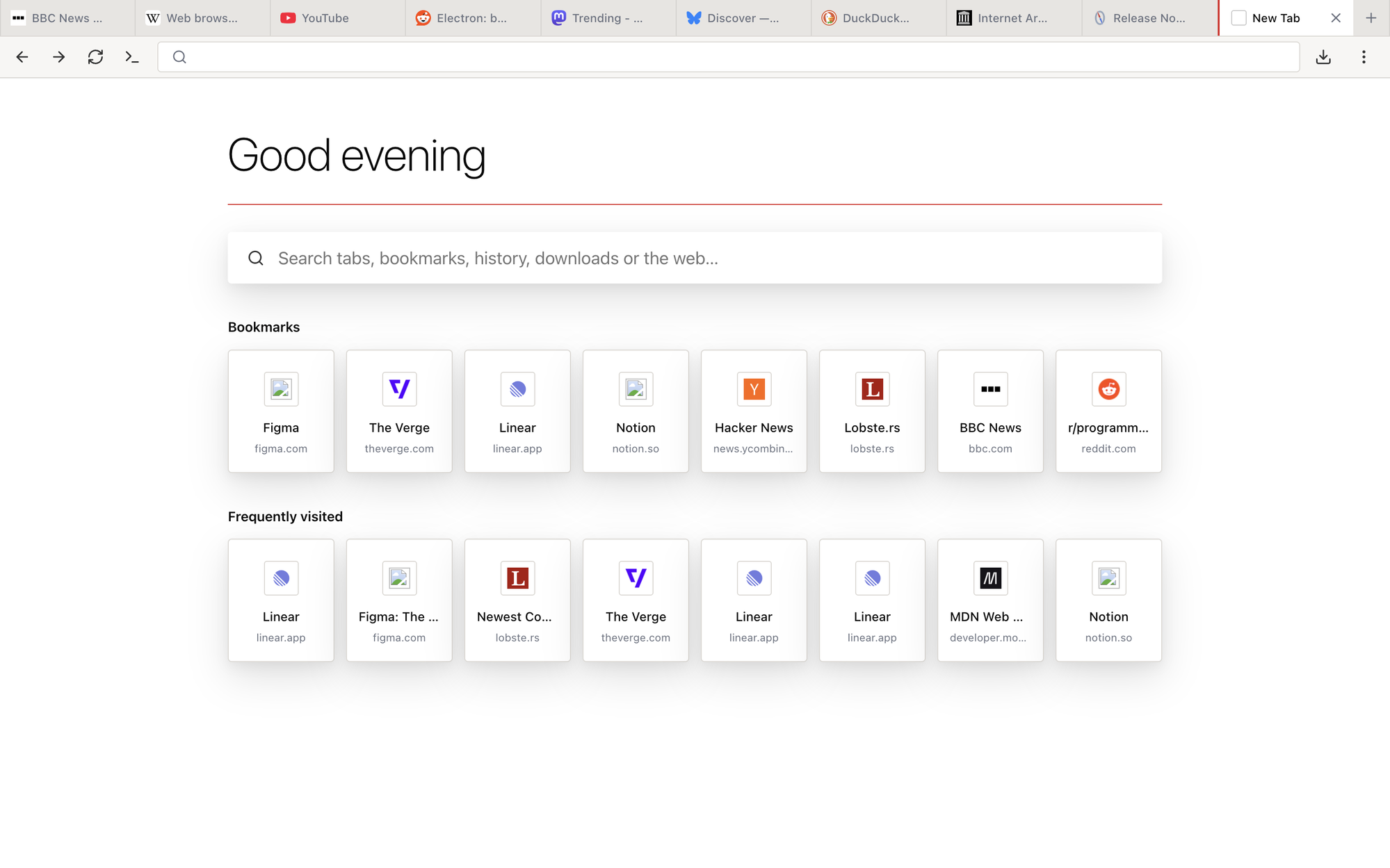
A browser built on fewer ideas, executed properly.
Every feature earns its keep. Anything that doesn't, isn't here.
Lightweight
Built for speed and efficiency. Minimal system resources, fast startup, no idle network chatter.
Privacy First
Your data stays yours. No telemetry, no tracking, no analytics. We don't know who you are, and we like it that way.
No AI Bloat
No forced assistants, no chatbots, no "smart" features you never asked for. Just a browser that browses.
Safe Browsing
Built-in protection against malicious sites and downloads. Local-only blocklists. Security without surveillance.
Open Source
Fully transparent. Audit it, fork it, contribute. Your browser should have nothing to hide — ours doesn’t.
Modern Engine
Powered by Electron and Chromium for compatibility with the modern web while respecting your privacy.
Everything you need. Nothing you don't.
Lighter, by design. Measured, not promised.
Same hardware. Same 50 tabs. Half the appetite.
−57%
Nav0 holds 50 typical tabs in roughly half the RAM Chrome wants for the same workload.
−76%
No background sync. No recommendation engine. No idle network requests. Just a browser.
The browser became a data harvesting machine.
What started as a simple tool to view web pages turned into a billboard: AI assistants you didn't ask for, news feeds you didn't subscribe to, accounts you didn't sign up for, telemetry you can't see.
Nav0 takes a different approach. It does one thing: lets you browse the web. No assistants. No phoning home. No clutter. No accounts. Browse. Bookmark. Done.
Thoughts on privacy, browsers, and the open web.
The Case Against Browser Sync
Firefox, Brave, and Vivaldi all market privacy while running cloud sync services. Here's why uploading your browsing data is incompatible with collecting nothing.
What chrome://flags Actually Does: The Privacy-Relevant Flags
What the privacy-relevant chrome://flags actually do, their current defaults, and why flipping experimental flags usually hurts your privacy more than it helps.
HTTP/3, QUIC, and ECH Explained for Curious Browser Users
A plain-English explainer of HTTP/3, QUIC, and Encrypted Client Hello — what actually changed under the hood, and what it means for what your ISP can still see when you browse.
What We Stripped From Chromium (and What Broke)
A component-by-component breakdown of what we removed from Chromium to build Nav0 — telemetry, background sync, speculative pre-rendering, and the recommendation engine — and what users actually lose.
Honest UA vs Spoofed UA: A Field Report on What Actually Breaks
A concrete list of what breaks when an indie browser lies about being Chromium — Client Hints, bot defenses, passkeys, DRM, Web Push, store installs, analytics, and more — written for other indie browser teams.